
Understanding Sourdough Discard Shelf Life
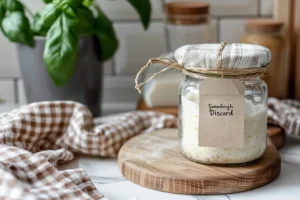
When I first started keeping a sourdough starter, I never really thought about what happened to the leftovers — the “discard.” I’d feed my starter faithfully, scoop out the extra, and wonder how long that jar of thick, tangy batter would actually last sitting in my fridge.
It took me a few spoiled jars and more than one strange smell to realize something important: sourdough discard shelf life isn’t the same for everyone. It depends on how you store it, how often you bake, and how carefully you handle it.
Sometimes my discard stayed fresh for nearly two weeks. Other times, it turned gray and lifeless after just a few days. That’s when I started paying closer attention — learning how temperature, moisture, and air exposure really affect that little jar of living culture.
In this guide, I’ll walk you through exactly how long sourdough discard lasts, what signs to watch for, and a few easy tricks to keep it usable longer. And if you haven’t already read my post on How to Store Sourdough Discard, you’ll definitely want to check that out next — because good storage is what keeps your discard alive (and safe) long after feeding day.
Table of Contents
The Basics: How Long Sourdough Discard Lasts
Before we can talk about how to extend it, it helps to understand what actually affects sourdough discard shelf life. The truth is, discard doesn’t have a fixed expiration date — it’s a living mixture that changes depending on how you store it, the temperature of your kitchen, and how often you bake.
If you leave your discard on the counter, it will keep for about one to two days before it becomes overly acidic or starts to separate. In the refrigerator, it can last 10 to 14 days, sometimes longer if handled carefully. But if you really want to hold onto it for weeks (or even months), freezing is the safest way — discard in the freezer can stay good for up to three months without losing its flavor or usefulness.

Here’s a simple chart I keep taped inside my pantry door — a quick guide for when I’m not sure how long my jar’s been sitting there:
| Storage Method | Shelf Life | Notes |
|---|---|---|
| Room Temperature | 1–2 days | Great if you plan to bake soon. Use for pancakes or crackers. |
| Refrigerator | 10–14 days | Ideal for regular bakers; keeps flavor mild and safe. |
| Freezer | Up to 3 months | Best for long-term storage; defrost before baking. |
When in doubt, always rely on your senses. If your discard smells pleasantly tangy, it’s still fine. If it smells sour in a harsh or chemical way — or looks fuzzy, pink, or gray — it’s past its limit.
You can learn how to recognize these changes more easily in Can Discard Go Bad? Signs and Safety Tips (Coming Soon), where I break down every visual and scent cue to help you decide when to save it and when to toss it.
How to Tell When Sourdough Discard Has Gone Bad
There comes a moment for every baker when you open that jar of discard and hesitate — your nose picks up something different, and you start wondering if it’s still good. The truth is, sourdough discard shelf life depends on how carefully you store it, but even with the best habits, it doesn’t last forever. Knowing when it’s crossed the line makes all the difference between flavorful baking and a ruined batch.
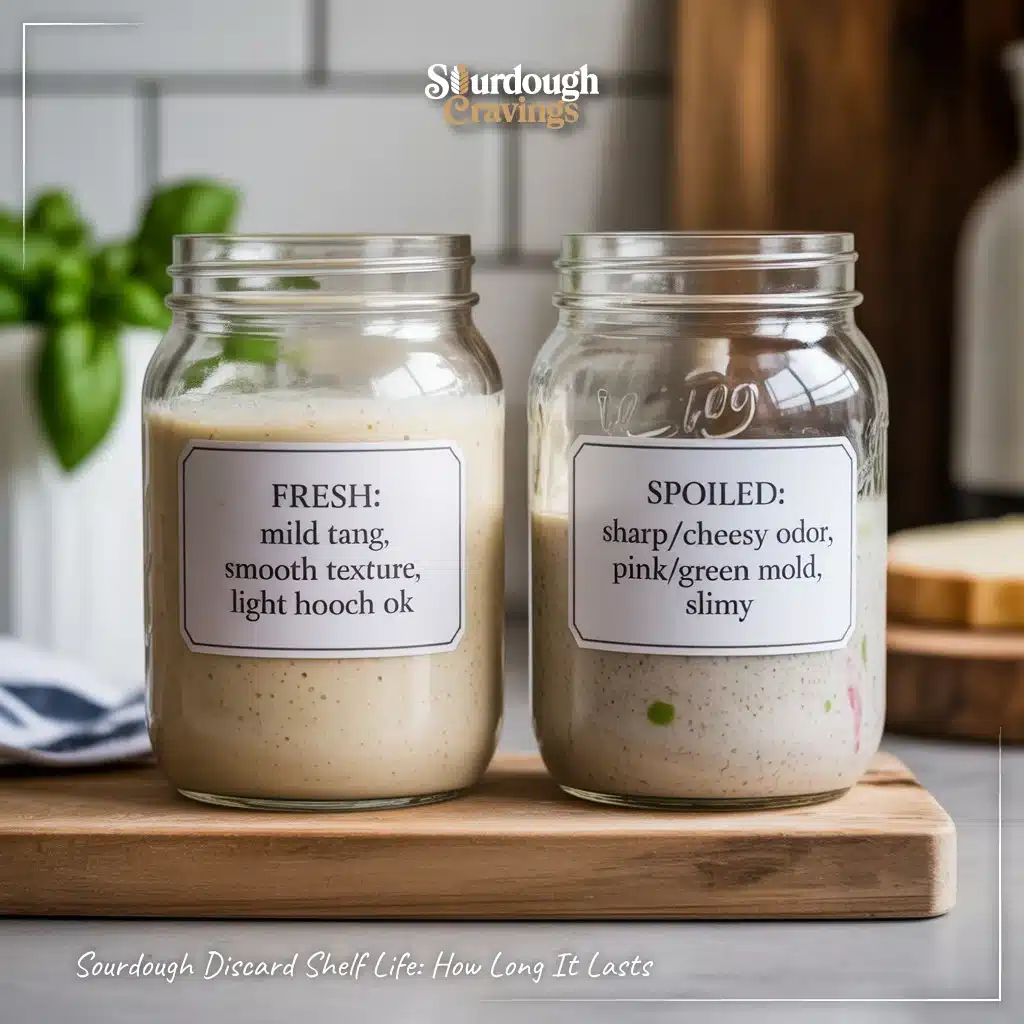
The first sign that your discard has turned is the smell. When it’s fresh, it carries a light sour aroma — something like yogurt or mild vinegar. That’s a good sign. But once the smell shifts to something sharp, cheesy, or chemical, it’s time to say goodbye. That strong odor means the bacteria have taken over, and no amount of stirring or feeding will fix it.
The next thing to check is color. A little dark liquid on top, called hooch, is normal. You can pour it off or mix it back in, depending on the flavor you like. But if you see pink, orange, green, or any fuzzy spots, that’s mold — and that means your sourdough discard shelf life has officially ended. Even if the mold looks small or surface-level, it runs deeper than you think. It’s safest to throw the whole jar away and wash it thoroughly before starting over.
Texture tells you a lot too. Fresh discard is thick and smooth, almost like pancake batter. If it starts feeling slimy, stringy, or stretchy like melted cheese, it’s past saving. The natural balance between yeast and bacteria has broken down, and that’s not something you can fix.
Sometimes you’ll find a thick, dark hooch layer on top. That’s another sign of neglect. A little gray is fine — it just means your starter got hungry — but dark brown or black hooch means it’s been too long. When in doubt, toss it out.
Finally, look for dryness or crust around the edges of your jar. If the top layer has hardened, cracked, or shows fuzzy growth, it’s time to start fresh. Even refrigerated discard can dry out if the lid isn’t sealed tightly enough.
If you’re ever unsure, trust your senses. A bad smell, odd color, or strange texture all mean the same thing — your sourdough discard has reached the end of its shelf life. There’s no shame in throwing it out. It’s part of the natural rhythm of baking.
If you’d like to see photos and comparisons that show what’s still usable and what isn’t, take a look at my detailed guide: Troubleshooting Discard: Mold & Hooch Guide. It’ll help you recognize safe discard at a glance and keep your kitchen routine stress-free.
How to Extend Sourdough Discard Shelf Life
When I first started baking, I threw out more sourdough discard than I care to admit. It wasn’t because it had gone bad right away — I just didn’t understand how to make it last. Some days, I’d find it dried out, gray, or smelling far too sour to save. It took a few ruined jars before I learned that keeping discard fresh isn’t about complicated tricks. It’s about small habits done with care.
A longer sourdough discard shelf life comes down to three things: temperature, cleanliness, and timing. Once I started paying attention to those, my discard stayed usable much longer — and I stopped wasting so much flour.
Keep It Cool
Temperature plays the biggest role in how long your discard lasts. Warmth speeds up fermentation, while cold slows everything down. If you bake a few times a week, keep your jar in the refrigerator — it’ll stay fresh for about ten to fourteen days. If you bake less often, freezing small portions is a better choice.
Use Clean Jars and Utensils
It sounds simple, but it makes a world of difference. Even a tiny bit of residue or food on your spoon can introduce unwanted bacteria. I make it a habit to wash my jars with hot water and vinegar before adding fresh discard. It only takes a moment, and it keeps my sourdough discard shelf life steady and reliable.
Store Only What You’ll Use
There’s no need to keep a giant jar of discard if you’re not baking daily. Smaller amounts stay fresher and are easier to manage. I usually keep just enough for a batch of pancakes or crackers — maybe a cup at most. It’s easier to replace than rescue.
Keep Your Starter Healthy
A strong starter creates better discard. When your starter is regularly fed and balanced, the discard it produces will be stable and mild in flavor. If your feeding routine feels inconsistent, my guide on Sourdough Discard Feeding Schedule can help you find a rhythm that fits your baking style.
Freeze the Rest
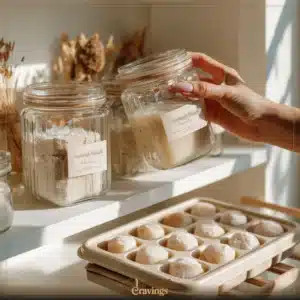
If you’ve got more than you can use in two weeks, freezing is your best friend. I spoon my discard into small containers or silicone molds, label them with the date, and freeze them flat. Frozen discard keeps its flavor for up to three months. When I need some, I let it thaw in the fridge overnight, give it a good stir, and it’s ready to use.
Don’t Mix Old and New
One habit that’s saved me a lot of trouble: never mix new discard with old. Once a batch has been sitting for more than a week, it’s better to start a new jar. The older discard can sour or spoil faster and ruin your fresh batch.
By keeping things clean, cool, and intentional, you’ll easily double your sourdough discard shelf life — maybe even more. It doesn’t take perfection, just a little consistency.
And if you want to go further, my full guide on How to Freeze Sourdough Discard walks through exactly how to preserve texture, taste, and freshness for months. It’s simple, practical, and perfect for bakers who hate waste.
Room Temperature vs Fridge vs Freezer
One of the biggest questions new bakers have is where to store their discard. Should it stay out on the counter? Does it belong in the fridge? Or can you just freeze it and forget about it? The truth is, each method has its place — and each one affects your sourdough discard shelf life in a different way.
When I first started baking, I kept everything at room temperature because I thought that’s what sourdough needed. It didn’t take long to realize that the warmer your kitchen, the faster your discard turns. Leaving it out for a day or two is fine if you plan to bake right away — pancakes, crackers, waffles — anything that uses fresh discard. But after that, the acidity takes over and the smell turns sharp. Room temperature storage is short-term, nothing more.
Then I moved my discard to the refrigerator, and that’s when things changed. The cool air slowed everything down, keeping my discard mild and workable for almost two weeks. The fridge is perfect if you bake regularly but not every day. It buys you time without changing the flavor too much. Just remember to use a clean jar and check for hooch or drying around the edges every few days.
Freezing, on the other hand, is your safety net. It’s the best way to stretch your sourdough discard shelf life if you’re not baking for a while. When I know I’ll be too busy, I portion my discard into small containers or ice cube trays, label them with the date, and freeze them. Frozen discard lasts up to three months — maybe longer if it’s sealed well. When I’m ready to use it, I thaw what I need in the fridge overnight, stir it gently, and it’s good to go.
Each storage option has its own rhythm, and once you understand how they work, you can easily choose what fits your baking routine.
- Room temperature: Best for bakers who use discard daily.
- Refrigerator: Ideal for weekly baking and medium-term storage.
- Freezer: Perfect for long breaks or backup batches.
I keep two jars now — one in the fridge for everyday recipes, and one in the freezer for when life gets busy. It’s a small system, but it keeps my discard fresh, my starter happy, and my kitchen waste-free.
If you’re still unsure which method suits your lifestyle best, check out Refrigerator vs Freezer: Best Discard Storage (Coming Soon). It breaks down both methods in detail, helping you find the balance that makes your baking easier and your sourdough stronger.
Common Myths About Sourdough Discard Shelf Life
When I first started baking with sourdough, I believed every “rule” I read online. Some people said discard was useless after a few days. Others warned me that if I saw a drop of liquid on top, it was ruined. I followed those tips to the letter — and ended up throwing away perfectly good jars of discard.
The truth is, sourdough discard shelf life isn’t about some magic number or strict rule. It’s about understanding how this living mixture behaves and learning to trust your senses. Once you get that, everything changes.
Let’s clear up a few of the most common myths that still trip bakers up today.
Myth 1: Sourdough Discard Expires After Three Days
This one used to scare me. I’d mark my jars like a ticking clock and toss them after day three, no matter what. Eventually, I realized that discard stored properly in the fridge can stay good for up to two weeks — sometimes longer. The trick is keeping it clean, cool, and covered. The discard doesn’t just die after three days; it simply slows down, waiting for its next use.
Myth 2: Hooch Means It’s Spoiled
The first time I saw hooch — that thin gray liquid on top — I panicked. I thought I’d ruined it. But hooch is actually a normal part of the process. It’s just alcohol released by the yeast when your discard has been sitting for a while. Stir it back in if you like the stronger tang, or pour it off if you prefer a milder flavor. Either way, your discard is perfectly fine.
Myth 3: You Can Scrape Off Mold and Keep the Rest
This one’s risky, and I’ve seen plenty of people try it. I did too, once. I scooped off a small moldy spot, baked with the rest, and regretted it later. The truth is, once mold appears, it’s already spread through the entire jar — even if you can’t see it. When that happens, it’s time to let it go and start fresh. Your health (and your next batch) will thank you.
Myth 4: The Older the Discard, the Better the Flavor
It’s easy to think that older means richer — like aged cheese or wine. But with sourdough discard, there’s a fine line between “developed flavor” and “bitter mess.” A few days of resting can add a nice depth, but after too long, it just turns harsh. Fresh discard gives you a balanced, pleasant sourness that works beautifully in most recipes.
Myth 5: Discard Is Waste
This is the biggest one, and it couldn’t be further from the truth. Discard isn’t trash — it’s just unfed starter. It’s full of flavor and character. You can use it for pancakes, waffles, muffins, or crackers. It’s part of the rhythm of sourdough: you feed your starter, you collect your discard, and you use it to create something new. Once I started seeing it that way, my baking became less wasteful and a lot more joyful.
If you take one thing away from this, it’s that sourdough isn’t about perfection — it’s about learning its patterns and building a relationship with it. Once you understand your sourdough discard shelf life, you’ll know exactly when to save it, when to use it, and when to start over — no guessing, no fear, just confidence.
And if you’re curious about turning that extra discard into something delicious, take a look at my guide on What to Do with Sourdough Discard. It’s full of simple recipes that make the most of every jar you save.
Key Takeaways
If there’s one thing I’ve learned about sourdough, it’s that time teaches you more than any recipe ever could. I used to think I needed exact answers — how long discard lasts, when to feed it, what color it should be — but over the years, I’ve realized it’s more about learning to notice. The signs are always there if you pay attention.
Here’s what I’ve come to understand about sourdough discard shelf life and how to make the most of it.
1. Temperature is everything.
Warm kitchens speed up fermentation, while the cold slows it down. Keeping your discard in the fridge buys you time — usually a good ten to fourteen days — without losing flavor or freshness. If you need more time, the freezer is your best friend.
2. Clean habits keep it alive.
It’s easy to overlook, but clean jars, spoons, and lids make all the difference. Even a trace of old dough or moisture can shorten your discard’s life. Treat it like food you care about, because that’s what it is — something living that feeds you back when you treat it well.
3. Trust your senses.
No clock or calendar will tell you more than your own nose and eyes. When the smell turns harsh, when the texture feels off, when the color changes — those are your signs. Trust them.
4. Don’t be afraid to start over.
Everyone loses a jar now and then. It’s not a failure; it’s part of the rhythm of baking. Every time you feed your starter, you have another chance to build something better.
5. Discard isn’t waste — it’s potential.
Once you learn how to care for it, that little jar becomes one of the most versatile ingredients in your kitchen. Pancakes, biscuits, crackers, even brownies — all of them start with what most people throw away.
When you think about it, understanding sourdough discard shelf life is really about slowing down and paying attention. It’s about respect — for your ingredients, for the process, and for the time it takes to create something honest and alive.
Final Thoughts
There’s something about sourdough that changes the way you see time. It slows everything down. When I first started baking, I thought it was all about recipes — ratios, timing, precision — but the more I worked with it, the more I realized it was teaching me something else entirely. Patience. Awareness. Care.
I remember those early weeks so vividly. My counter always had a jar sitting on it — sometimes bubbly and alive, sometimes flat and quiet. I’d check it constantly, lifting the lid, sniffing, wondering if I’d done something wrong. Back then, I didn’t really understand how sourdough discard behaves or how long it can safely last. I thought once it looked a little gray or smelled stronger, it was ruined. I threw away so much perfectly good discard because I didn’t trust what I saw. If you’re just starting out, you can save yourself from those same mistakes by reading Sourdough Discard 101 — it explains exactly what’s normal, what’s not, and how to tell when your discard is still perfectly usable.
But the truth is, sourdough isn’t fragile — it’s resilient. It doesn’t need you to be perfect. It just needs you to pay attention. The more you handle it, the more you start to know it — the way the smell changes after a few days, how the texture shifts, how it settles quietly in the jar. You start to read it the way you might read the sky before a storm.
Over time, you stop measuring days and start listening instead. You can tell by the smell if it’s still good. You can see in the texture if it’s tired or strong. You can feel it — not in a mystical way, just in the way you know something familiar because you’ve spent time with it. That’s the real way to understand sourdough discard shelf life — not through charts, but through care.
There have been weeks when my discard didn’t last long, when I forgot to tighten the lid or left it out too warm. I used to get frustrated when I had to start over, but now I see it differently. Every time I lose a jar, it’s a small reminder that this is a living thing — it responds to how you treat it. It mirrors your attention.
And that’s what makes sourdough so special. You can’t rush it, and you can’t fake it. It asks for real time, real patience, and real curiosity. But in return, it gives you something grounding — a reason to pause, to notice, to care for something small. If you ever need a bit more confidence in what “healthy discard” should look or smell like, The Perfect Loaf’s guide to maintaining your sourdough starter
offers an expert perspective trusted by professional bakers.
If your discard goes bad, don’t feel discouraged. Just start again. Mix a little flour and water, stir it slow, and let it breathe. You’ll find that the process itself — not the perfect loaf or the spotless jar — is what teaches you the most.
That’s what I love about sourdough: it forgives. Every mistake becomes a lesson, and every fresh start feels like a small act of hope.
So take your time. Watch it, smell it, touch it. Learn the quiet language it speaks. Because sourdough discard shelf life isn’t really about how long a jar lasts — it’s about how present you are while it does.
And if you pay attention long enough, one day you’ll open that jar and know, without a doubt, that it’s ready — not because someone told you, but because you can feel it.
That’s when you’ll know you’ve really learned sourdough.